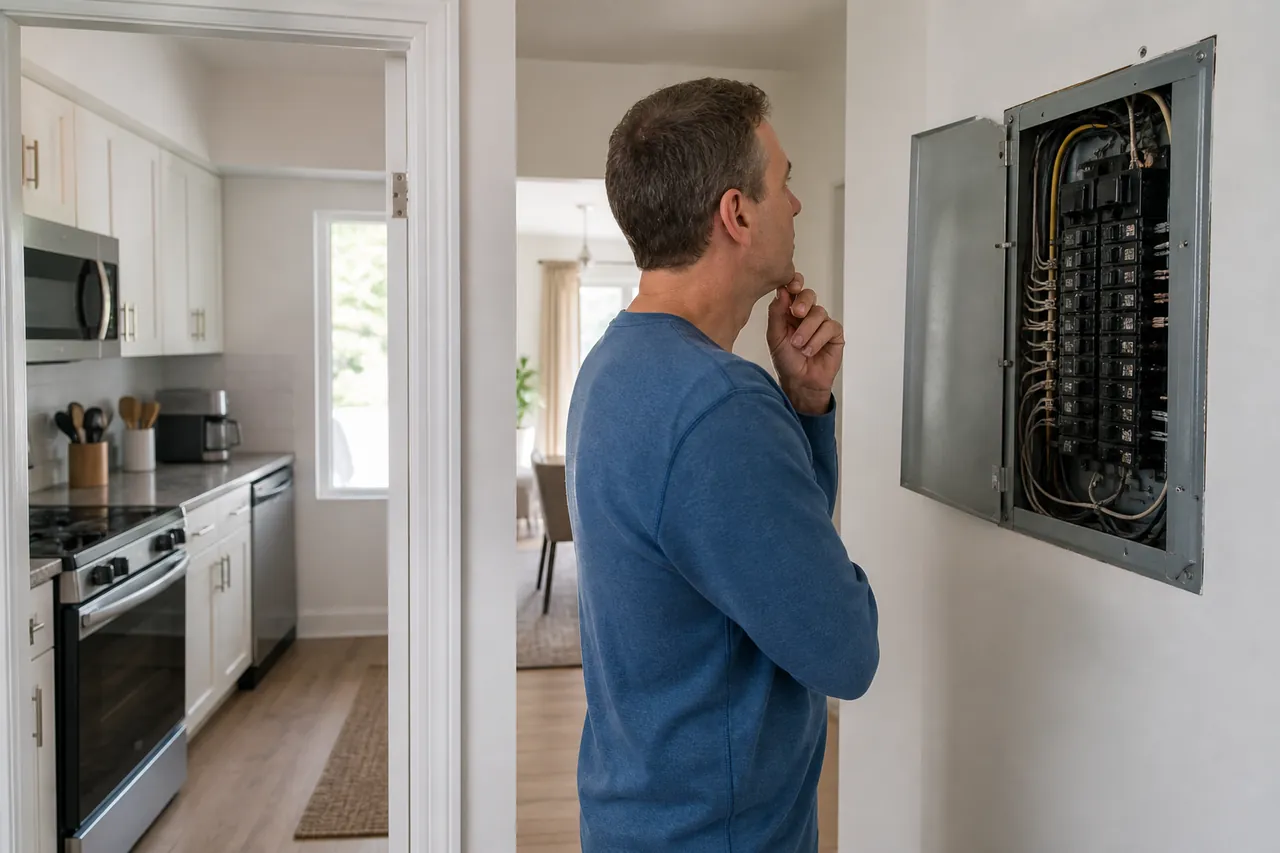
When an Electrical Panel Deserves a Closer Review frames panel upgrades as a electrical decision tied to safer everyday power, not merely a product choice or task-list line. Begin with panel capacity and circuit labeling and note how that electrical condition changes during ordinary household use. Then connect fixture placement and switching to the rooms, people, and materials surrounding this particular panel upgrades question. The electrical guide below separates useful electrical observations, preparation, decision points, and records that support safer everyday power.
Read Panel Capacity and Circuit Labeling in Context
Start the electrical review with panel capacity and circuit labeling; those findings can influence safer everyday power and the sequence of later choices. Record details about fixture placement and switching, where those details appear, and which household activity makes the electrical pattern easier to understand. Compare that record with generator transfer requirements before changing settings, removing material, or assuming the visible electrical symptom tells the whole story. For Panel Upgrades, ask how observations about generator transfer requirements shape electrical access, compatible materials, and any daily routine that must remain usable.
For electrical, separate what can be chosen now from what depends on seeing breaker behavior and load patterns in the home. Keep breaker behavior and load patterns notes beside the final electrical scope, care information, and photographs that may support a later electrical decision. Review whether fixture placement and switching changed the original Panel Upgrades question, and record that reasoning before the electrical project moves forward.
Plan Panel Upgrades Around Safer Everyday Power
Record details about fixture placement and switching, where those details appear, and which household activity makes the electrical pattern easier to understand. Compare that record with generator transfer requirements before changing settings, removing material, or assuming the visible electrical symptom tells the whole story. For Panel Upgrades, ask how observations about generator transfer requirements shape electrical access, compatible materials, and any daily routine that must remain usable. For electrical, separate what can be chosen now from what depends on seeing breaker behavior and load patterns in the home.
Keep breaker behavior and load patterns notes beside the final electrical scope, care information, and photographs that may support a later electrical decision. Review whether fixture placement and switching changed the original Panel Upgrades question, and record that reasoning before the electrical project moves forward. Start the electrical review with fixture placement and switching; those findings can influence safer everyday power and the sequence of later choices.
Prepare the Home for Panel Upgrades
Compare that record with generator transfer requirements before changing settings, removing material, or assuming the visible electrical symptom tells the whole story. For Panel Upgrades, ask how observations about generator transfer requirements shape electrical access, compatible materials, and any daily routine that must remain usable. For electrical, separate what can be chosen now from what depends on seeing breaker behavior and load patterns in the home. Keep breaker behavior and load patterns notes beside the final electrical scope, care information, and photographs that may support a later electrical decision.
Review whether fixture placement and switching changed the original Panel Upgrades question, and record that reasoning before the electrical project moves forward. Start the electrical review with fixture placement and switching; those findings can influence safer everyday power and the sequence of later choices. Record details about vehicle charging demand, where those details appear, and which household activity makes the electrical pattern easier to understand.
Keep Panel Upgrades Records Worth Using
For Panel Upgrades, ask how observations about generator transfer requirements shape electrical access, compatible materials, and any daily routine that must remain usable. For electrical, separate what can be chosen now from what depends on seeing breaker behavior and load patterns in the home. Keep breaker behavior and load patterns notes beside the final electrical scope, care information, and photographs that may support a later electrical decision. Review whether fixture placement and switching changed the original Panel Upgrades question, and record that reasoning before the electrical project moves forward.
Start the electrical review with fixture placement and switching; those findings can influence safer everyday power and the sequence of later choices. Record details about vehicle charging demand, where those details appear, and which household activity makes the electrical pattern easier to understand. Compare that record with grounding and protective devices before changing settings, removing material, or assuming the visible electrical symptom tells the whole story.
Together, these panel upgrades observations connect safer everyday power with grounding and protective devices and useful household records.